Best Varnished Wire Applications and Benefits Explained
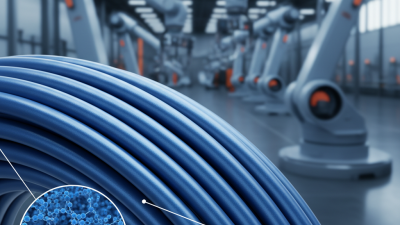
In the world of electrical engineering, Varnished Wire plays a crucial role. This specialized wire is essential for various applications. Understanding its benefits can help in selecting the right materials for projects.
Varnished Wire has a coating that enhances its performance. This insulation prevents short circuits and makes the wire durable. It is widely used in transformers, motors, and coils. The advantages of this wire are significant. It offers high temperature resistance and excellent mechanical strength.
However, not every application suits Varnished Wire. Certain conditions may limit its effectiveness. Engineers must assess their specific needs carefully. Choosing the wrong type can lead to inefficiencies. The goal is to maximize performance while minimizing risks. Understanding these factors is vital in making informed decisions.
Overview of Varnished Wire and Its Properties
Varnished wire is a commonly used material in electrical applications. Its unique properties make it ideal for a range of industries. The varnish coating provides excellent insulation, enhancing the wire's resistance to electrical current. According to a 2022 industry report, the global varnished wire market is projected to grow at a CAGR of 5% through 2025. This growth reflects an increasing demand for reliable wiring in numerous sectors, such as automotive and renewable energy.
One key characteristic of varnished wire is its thermal stability. It can withstand high temperatures without losing its insulating properties. This feature is essential for motors and transformers. A study found that varnished wires maintain performance up to 180°C, making them suitable for high-efficiency devices. However, some manufacturers still face challenges in ensuring consistent quality control during production.
In addition to electrical insulation, varnished wires also offer corrosion resistance. This is crucial for outdoor applications where exposure to moisture and chemicals can degrade performance. As reported by industry experts, nearly 20% of varnished wire failures are linked to environmental factors, underscoring the importance of proper application. The versatility of varnished wires means they can be adapted to fit specific needs, but designers must remain vigilant about changing standards and performance expectations.
Common Materials Used for Varnished Wire
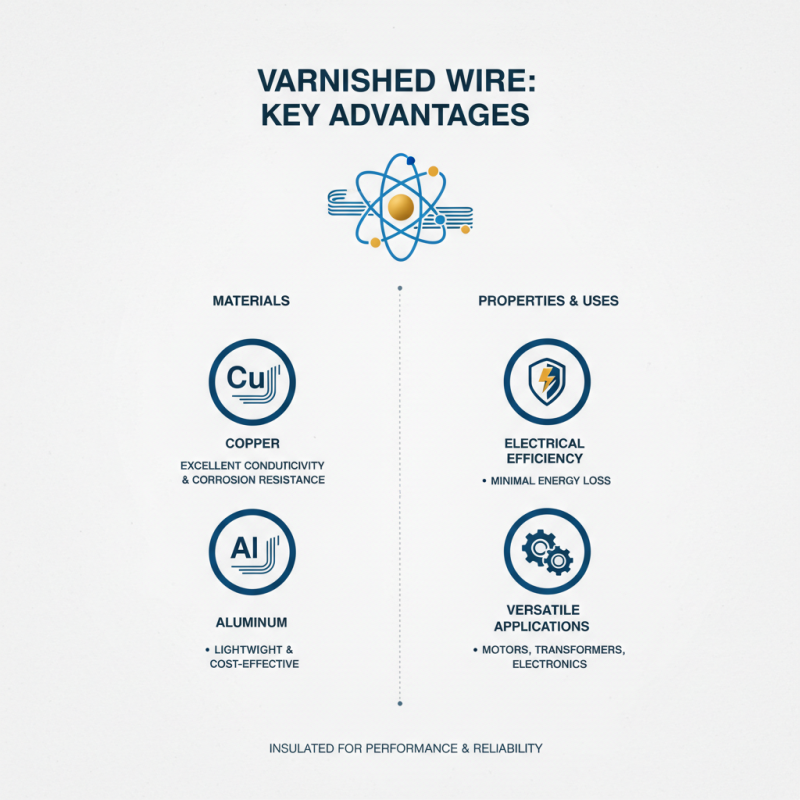
Varnished wire has become a prominent choice in various applications due to its unique properties and advantages. Common materials used for varnished wire include copper and aluminum. Copper is popular due to its excellent conductivity and resistance to corrosion. In fact, copper wire is known to carry electricity with minimal losses, making it ideal for electrical components.
Aluminum, while lighter and often more cost-effective, has specific uses in industries like aerospace and automotive. According to a recent market report, aluminum varnished wire demand is expected to grow by 5% annually. This rise is attributed to its lightweight characteristics and increasing use in electric vehicles. Both materials are typically insulated with a varnish layer, which enhances performance and durability.
While varnished wire offers several benefits, there are challenges. Varnishing can sometimes create a barrier that affects solderability. This may require additional processes to ensure connections are reliable. The thickness of the varnish layer can also vary, impacting wire flexibility. With innovation ongoing in varnish technology, addressing these issues is crucial for optimizing performance in various applications.
Key Applications of Varnished Wire in Various Industries
Varnished wire is becoming increasingly important across various industries. Its applications are diverse and essential. In the automotive sector, varnished wire is often used in electric motors and generators. It enhances the efficiency of these components significantly. The wire prevents short circuits, ensuring reliable vehicle performance. Additionally, the insulation provided by varnished wire helps resist heat build-up, extending the lifespan of automotive parts.
In the electronics industry, varnished wire plays a crucial role as well. It is widely employed in transformers and inductors. The varnish coating improves the wire's mechanical strength and thermal stability. This application is vital for maintaining performance in high-temperature environments. Interestingly, the wire is also used in windings, connecting various electronic components securely. However, one must consider the environmental impact of manufacturing varnished wire. The production process can generate waste, prompting a need for better practices. Exploring sustainable alternatives could enhance its application while minimizing any potential harm.
Advantages of Using Varnished Wire in Electrical and Thermal Insulation
Varnished wire is a key player in electrical and thermal insulation. This unique material is coated with a layer of varnish, which enhances its performance in many applications. The varnish provides excellent resistance to moisture and heat, making it ideal for use in motors and transformers.
One major advantage of varnished wire is its electrical insulation properties. The varnish helps prevent short circuits and electrical faults. In addition, it protects the wire from harsh environments where humidity and temperature fluctuations can cause damage. Using varnished wire can reduce maintenance costs, as it extends the lifespan of electrical components.
However, one must consider the challenges. The varnish can sometimes limit flexibility, which can be an issue in tight spaces. Additionally, not all varnishes are made equal. Some may not withstand extreme temperatures. It's essential to choose the right type for specific applications. Balancing these strengths and weaknesses can lead to better project outcomes.
Best Varnished Wire Applications and Benefits Explained
| Application |
Benefits |
Usage Environment |
Material Type |
| Transformers |
Enhanced thermal resistance |
High voltage environments |
Enamel-coated copper |
| Electric Motors |
Improved electrical insulation |
Industrial settings |
Varnished aluminum |
| Home Appliances |
Durability against moisture |
Residential usage |
Polyester-varnished wire |
| HVAC Systems |
Resistance to high temperatures |
Climate-controlled environments |
Self-bonding wire |
| Renewable Energy Systems |
Enhanced efficiency in power generation |
Outdoor installations |
Thermally conductive varnished wire |
Comparison of Varnished Wire with Other Types of Wire
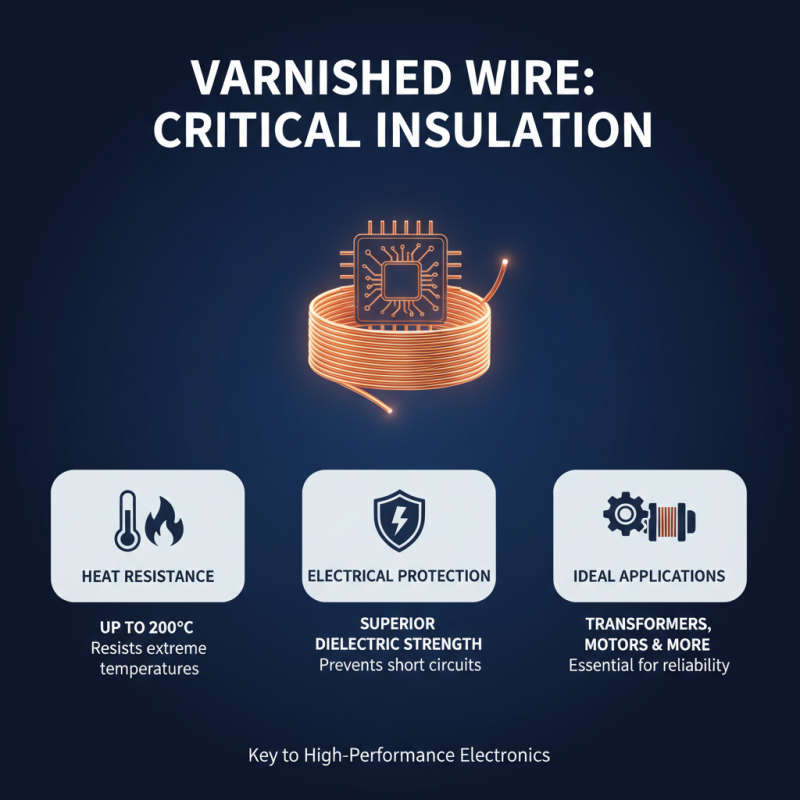
Varnished wire stands out among various wire types in numerous applications. Its insulation properties are key. With temperatures reaching up to 200°C, it withstands heat better than many alternatives. The varnish provides excellent dielectric strength, helping prevent electrical short circuits. This makes it ideal for critical applications, like transformers and motors.
Comparing varnished wire to uncoated wire reveals stark differences. Uncoated wire lacks insulation, increasing the risk of failures in high-voltage environments. According to a recent report, varnished wire can prolong lifespan by 50%. However, it may not be suitable for all applications. Users should consider the specific environment and potential exposure to chemicals. Issues can arise if the varnish degrades under high humidity, affecting performance.
When matched against other insulated wires, varnished wire shows mixed results. While it excels in thermal resistance, its flexibility might be lacking. Some users find it harder to work with, especially in tight spaces. Balancing its advantages with these challenges is crucial. This reflects the need for careful consideration in material selection based on project demands.