How to Choose the Right Insulating Wire for Global Sourcing?
Choosing the right Insulating Wire for global sourcing is not a simple price comparison. It is a reliability decision made across materials, factories, standards, and operating conditions. A wire that looks identical in a catalog may behave differently in a hot motor, a vibrating appliance, or a damp control cabinet. Small differences matter.
Dr. Michael Pecht, a recognized reliability engineering expert, states, “Reliability is designed in, not tested in.” That principle fits Insulating Wire selection closely. Buyers should examine conductor material, insulation type, temperature rating, voltage class, flexibility, flame performance, and aging resistance. They should also verify test reports, factory controls, traceability, and certification scope. UL, IEC, RoHS, and REACH requirements may affect different markets and applications. Certificates alone are not enough.
Ask practical questions. Where will the wire operate? How often will it bend? What chemicals may touch it? Can the supplier provide stable samples from regular production? A factory audit can reveal rushed stripping, uneven insulation, or poorly stored copper. Those details rarely appear on a quotation.
The cheapest option may fail first. That cost is easy to underestimate. A useful sourcing matrix can compare total risk, not only unit price. Still, no matrix is perfect. Field validation remains necessary, especially when switching suppliers or insulation compounds. Careful selection combines engineering evidence, supplier experience, and honest review of what remains uncertain.
Define Conductor Classes Using IEC 60228: Classes 1, 2, 5, and 6
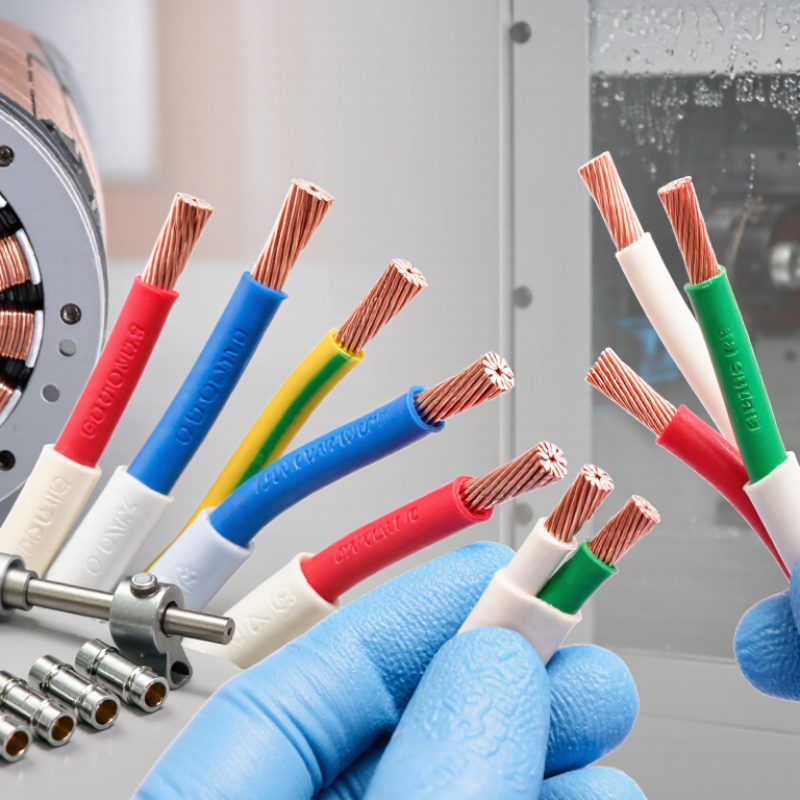
Choosing insulating wire for global sourcing starts with the conductor, not the insulation color. IEC 60228 defines four useful conductor classes: Class 1 is solid, Class 2 is stranded and rigid, Class 5 is flexible, and Class 6 is extra-flexible. These classes describe conductor construction and flexibility. They do not automatically confirm voltage, temperature, fire, or chemical performance.
Class 1 suits fixed installations where movement is unlikely. Class 2 offers better handling and reduced bending stress during installation. Class 5 works well in control panels, portable equipment, and repeated flexing. Class 6 provides even greater flexibility, but its finer strands may need careful termination and protection from mechanical damage. I have seen purchasing teams select Class 5 by habit. That is convenient, but not always technically sound.
The International Copper Study Group’s October 2024 market forecast placed refined copper use near 26 million tonnes for 2024. Growing infrastructure demand makes conductor efficiency and material traceability more important during sourcing. Ask suppliers for IEC 60228 class confirmation, conductor resistance, strand construction, and test records. Also check whether the finished cable matches the destination market’s installation rules. A Class 6 conductor may bend beautifully, yet perform poorly with an unsuitable terminal. The standard helps define the conductor, but the complete cable still requires practical review.
How to Choose the Right Insulating Wire for Global Sourcing? - Define Conductor Classes Using IEC 60228: Classes 1, 2, 5, and 6
| IEC 60228 Class |
Conductor Construction |
Flexibility Level |
Common Nominal Sizes for Sourcing |
Typical Applications |
Key Procurement Checks |
Class 1
Solid conductor |
One solid metallic conductor. Usually selected where the cable remains fixed and repeated movement is not required. |
Lowest flexibility among the four classes. |
Commonly specified in fixed wiring sizes such as 1.5, 2.5, 4, 6 and 10 mm². The applicable edition of IEC 60228 determines the permitted range and requirements. |
Fixed building wiring, control panels, distribution circuits and installations with limited bending. |
Verify conductor diameter, material, nominal cross-sectional area, DC resistance at 20 °C and compatibility with the cable insulation and termination system. |
Class 2
Stranded rigid conductor |
A conductor made from multiple wires, normally laid together to form a compact or non-compact stranded conductor. |
More flexible than Class 1, but intended primarily for fixed installation. |
Commonly specified in 1.5, 2.5, 4, 6, 10, 16, 25, 35, 50 and 70 mm² circuits; larger sizes are also covered by the standard subject to the applicable edition. |
Power cables, industrial distribution, switchgear, motor feeders and fixed equipment wiring. |
Confirm strand arrangement, maximum conductor resistance, compactness, elongation, surface condition and termination performance. |
Class 5
Flexible conductor |
Many fine wires stranded together to provide substantially greater flexibility than Classes 1 and 2. |
Flexible; suitable for equipment wiring and applications involving occasional movement. |
Frequently specified in 0.5, 0.75, 1, 1.5, 2.5, 4, 6, 10 and 16 mm² sizes; the permitted range depends on the standard edition and product design. |
Portable equipment, appliance cords, control cables, internal wiring and assemblies requiring easier routing. |
Check the strand diameter and count, conductor resistance, flexing requirements, crimp compatibility, insulation stripping behavior and minimum bending radius. |
Class 6
Extra-flexible conductor |
A conductor formed from very fine wires, designed for greater flexibility than Class 5 at the same nominal cross-sectional area. |
Highest flexibility level defined in IEC 60228. |
Commonly specified in small and medium sizes such as 0.5, 0.75, 1, 1.5, 2.5, 4, 6 and 10 mm²; verify the exact size range against the applicable edition. |
Highly flexible cords, moving equipment, robotics-related cable assemblies and applications with tight routing or repeated movement. |
Confirm fine-strand construction, fatigue performance, resistance stability after flexing, terminal suitability, strand damage control and minimum bend radius. |
Global sourcing checklist:
Specify the conductor class separately from the insulation type, voltage rating and temperature rating. IEC 60228 classifies the conductor construction and electrical resistance; it does not define the complete cable design. Always request the applicable IEC 60228 edition, nominal cross-sectional area in mm², conductor material, maximum DC resistance at 20 °C, strand construction and inspection or test records.
Note: The nominal sizes shown are commonly sourced examples, not a substitute for the complete dimensional and resistance tables in the applicable edition of IEC 60228. AWG and mm² designations are not directly interchangeable; confirm the required standard and tolerances before placing an order.
Match Insulation to Heat Ratings: PVC 70°C, XLPE 90°C, Silicone 180°C
How to Choose the Right Insulating Wire for Global Sourcing?
Insulation temperature ratings should guide every wire sourcing decision. PVC wire commonly supports up to 70°C in standard applications. It suits control panels, indoor equipment, and moderate ambient conditions. However, nearby motors, sunlight, or tightly bundled cables can raise conductor temperature quickly. Measure the real heat.
XLPE insulation typically handles up to 90°C and offers stronger thermal performance. It can be a practical choice for factory machinery, power distribution, and crowded cable trays. Silicone insulation can withstand around 180°C, making it suitable near heaters, ovens, and high-temperature chambers. It also remains flexible when exposed to repeated movement. Still, silicone may need extra protection against abrasion or sharp edges.
A past sourcing review taught me an uncomfortable lesson. We compared only the printed temperature rating and missed the installation environment. The wire passed the basic check, but the bundle carried more current than expected. Review ambient temperature, conductor size, voltage, bending, oil exposure, and installation spacing. Ask suppliers for full datasheets, test reports, and traceable production information. Confirm whether ratings apply continuously or under specific test conditions. Local electrical requirements may also differ between markets, so technical documents should be checked before ordering. A lower-cost PVC option can become unreliable when heat calculations are incomplete. XLPE or silicone may cost more, but replacement downtime can cost far more. Temperature is only one part of the decision.
Confirm Voltage Standards: IEC 60227 Covers PVC Cables up to 450/750 V
When sourcing insulating wire globally, confirm the voltage system before comparing price or copper weight. IEC 60227 covers PVC-insulated cables with rated voltages up to and including 450/750 V. This limit matters. A cable marked 300/500 V is not automatically suitable for a 450/750 V circuit. Request the exact voltage designation, conductor class, insulation thickness, temperature rating, and test records.
The International Energy Agency’s Electricity 2024 report projects global electricity demand to increase by more than 2,500 TWh between 2024 and 2026. More installations mean more cross-border cable purchases, but local supply systems still differ. A 230 V single-phase market may use different plugs, protective devices, and installation practices from a 120 V market. Check the complete system, not only the cable label. It is easy to miss.
Ask suppliers to identify the applicable IEC 60227 part, conductor material, flame behavior, and production batch. Verify markings against the test certificate and packaging. Also confirm whether the destination requires additional national approvals. IEC compliance supports technical consistency, but it does not replace local installation rules. A report can look convincing. The evidence may still be incomplete. This is where many sourcing decisions need a second review.
Evaluate Safety Compliance: IEC 60332 Flame Tests and RoHS Limits
When sourcing insulating wire globally, verify the flame test, not just the material name. IEC 60332-1-2 evaluates a single vertical cable under a 1 kW flame. The test checks flame spread and self-extinguishing behavior. A passing wire is not automatically low-smoke or halogen-free. For harnesses installed in bundles, request the relevant IEC 60332-3 test evidence. Single-wire results may not represent real installation conditions.
Check the test report’s cable size, insulation thickness, exposure time, and production date. The European Commission’s RoHS limits apply to homogeneous materials, including insulation layers. Lead, mercury, hexavalent chromium, PBBs, PBDEs, and four phthalates are generally limited to 0.1% by weight. Cadmium has a stricter 0.01% limit. Ask for laboratory results, not only a supplier declaration. Details matter.
ECHA Forum enforcement data reported about 18% non-compliance across products inspected in its REF-10 project. That figure is a warning, not a prediction. Request batch traceability and independent XRF screening for incoming reels. XRF cannot confirm every restricted substance. It can miss some organic compounds. A practical mistake is trusting one certificate for every factory. Recheck the actual insulation compound and manufacturing site before approval.
Compare Global Certifications: UL 758, CSA, IEC Standards, and AWG Sizing
Global wire sourcing begins with the certification required at the installation site. UL 758 covers appliance wiring material, including insulation temperature and voltage ratings. CSA requirements often apply to Canadian equipment and may demand different construction details. IEC standards use international voltage, testing, and metric conductor practices. They are not interchangeable by default. Verify the destination market, end-use category, and approval file before requesting samples.
Sizing creates another risk. AWG 18 copper measures about 20.95 ohms per kilometer at 20°C, while AWG 16 measures about 13.17 ohms, according to commonly referenced NIST conductor tables. IEC 60228 instead lists metric areas, such as 1.5 mm² and 2.5 mm². These sizes may look similar to AWG options, but their resistance and current capacity still require checking. The IEA’s Electricity 2024 report projects global electricity demand growth through 2026, increasing pressure on efficient, reliable wiring. In practice, I would compare resistance, insulation diameter, bend radius, and temperature rise together. A spreadsheet alone can miss installation realities. Field testing matters. Also, certificate databases can lag behind product revisions, so confirm the exact construction, not only the certificate number.
How to Choose the Right Insulating Wire for Global Sourcing?
Compare Global Certifications: UL 758, CSA, IEC Standards, and AWG Sizing
The chart compares nominal conductor cross-sectional areas for common AWG sizes with the nearest nominal IEC 60228 metric sizes. AWG dimensions are based on ASTM B258 values, while IEC sizes are nominal metric conductor areas. UL 758 and CSA appliance-wiring requirements address construction, insulation, markings, and use conditions; IEC 60227 and IEC 60228 use metric conductor sizing. These systems are not certification equivalents, and allowable current depends on insulation temperature rating, installation method, ambient temperature, bundling, and local requirements.
Reference standards: UL 758, CSA C22.2 appliance-wiring requirements, IEC 60227, IEC 60228, and ASTM B258.